


Find an outfit that lets you move with confidence
From your first heels class to floorwork: discover comfortable cuts, practical details, and pieces designed to move with you.
Explore Heels Dance Outfits
Wondering what to wear to your first heels dance class? Choosing between shorts, bodysuits, matching sets, leggings, and dance heels can feel overwhelming, especially when you're new to the style.
The best heels dance outfit should allow you to walk, turn, isolate your hips, transition to the floor, and stand up again without constantly adjusting your clothes. Style matters, but support, comfort, and freedom of movement matter just as much.
This guide explains how to choose heels dance clothes for your level and class format, what materials and fits to consider, and how to prepare for your first session. You'll also find five outfit ideas and an interactive DressFit outfit finder.
What Is Heels Dance?
Heels Dance, also called High Heels Dance, is a family of choreographed movement styles performed in heels. Classes may draw on jazz-funk, commercial dance, and performance-based choreography, with attention to confident walks, balance, musicality, and body isolations.
Depending on the instructor, you might practice turns, arm lines, hip isolations, level changes, and transitions between standing and floor positions. Different classes emphasize different skills, which is why their clothing requirements can vary.
Choreography-focused heels classes are not identical to exotic pole. Exotic pole involves dancing with a pole and may require specialized platform shoes or more exposed skin for grip. You should always check the description of your specific class before shopping.
An outfit that works well for standing choreography may not be ideal for repeated floorwork. Start with the movement requirements, then choose your preferred style.
What to Wear to Heels Dance Class as a Beginner
If you're attending your first class, you don't need an elaborate look. Focus on clothes that stay in place, allow a comfortable range of motion, and help you concentrate on learning.
Stretchy dance shorts with a supportive top are a practical starting point. A bodysuit can be another option if you prefer a continuous silhouette. You don't have to show any particular amount of skin: choose a level of coverage that makes you comfortable and suits the lesson.
Whatever you choose, check that your top does not ride up when you lift your arms and your shorts do not roll down when you bend your knees. If your studio requires floor transitions, check that the outfit also feels good while seated or kneeling.
The five-movement outfit test
Before heading to the studio, try your heels class outfit at home. You can do these movements without heels if necessary:
- Raise both arms above your head.
- Perform a comfortable knee bend.
- Rotate your upper body gently from side to side.
- Lean forward without forcing the movement.
- Take several steps and change direction.
If your top moves out of place, your waistband rolls, or you keep pulling at the fabric, try another size or cut. The goal is to forget about your outfit once the music starts.
Dance Shorts, Bodysuits, Matching Sets, or Leggings?
There is no single perfect type of heels dance attire. These options each have advantages, but the details of the fit matter as much as the category.
Dance shorts
Dance shorts are versatile because they leave your legs free and pair easily with different tops. A stable waistband matters during body rolls, bends, and fast changes of position. Shorts with a sewn-in layer may provide additional coverage, while other cuts emphasize a streamlined look.
Bodysuits
A bodysuit creates a continuous silhouette without a separate top and bottom. Check torso length carefully: a body that fits through the waist may still pull at the shoulders or become uncomfortable during deep movements.
Matching dance sets
Matching sets create a coordinated look without having to style two unrelated garments. When purchasing a set, check the fit of both pieces and whether sheer panels include a lining or require an additional layer. The pieces may also be useful separately.
Leggings and dance pants
Stretchy leggings or pants offer more coverage. Avoid excessively long hems that could interfere with your heels. Make sure the fabric allows the range of motion you need, particularly for wide steps and low positions.
| Clothing | Main benefit | What to check | Best for |
|---|---|---|---|
| Shorts + top | Freedom of movement | Waistband and top support | Beginners and choreography |
| Bodysuit | Streamlined silhouette | Torso length | Training and performance |
| Matching set | Coordinated look | Fit, transparency, lining | Workshops and filming |
| Leggings | More coverage | Length and stretch | Standing choreography |
| Mesh | Lightweight visual texture | Transparency and layering | Layered looks |
Which Fabrics Work Best for Heels Dance?
Fabric influences comfort, movement, and the way your clothes interact with the floor. Two fabrics that look similar in a photo can behave differently in class, so check the product description and test your outfit in motion.
Stretch fabrics
Stretch supports bends, turns, and wider movement. A good fit should recover its shape after stretching and remain comfortable throughout rehearsal. Check whether the fabric becomes noticeably sheer when stretched.
Mesh and sheer panels
Mesh adds texture and a layered look. Some styles have a sewn-in underlayer or shorts, while others are entirely sheer. Read the product details to know exactly what is included, rather than assuming all mesh garments have the same coverage.
Faux-leather-look materials
These fabrics can create a bold, defined silhouette, but surface finishes vary. For floorwork, test the material against the actual studio floor, since it may create more friction or glide differently from a matte knit fabric.
Seams and decorative details
Pay attention to seams around the waist, hips, crotch, and shoulders. Something that feels comfortable while standing can become distracting during low positions or repeated contact with the floor.
How to Choose the Right Size and Support
Compare your measurements with the size chart for the individual item. Don't assume that one size fits identically across shorts, bodysuits, or different fabrics.
For shorts, consider waist and hip measurements. For tops, consider your bust and how much support you prefer. For bodysuits, torso length is particularly important, even when the waist measurement looks correct.
If you're between sizes, use the product-specific fitting guidance instead of automatically sizing down. Tightness is not the same as support: a garment should feel secure without restricting movement.
After checking your measurements, repeat a few basic class movements. Your clothing should feel stable without pinching, pulling, or requiring constant adjustments.
What to Wear for Heels Floorwork
Floorwork includes movements performed on the ground, such as controlled descents, seated positions, kneeling transitions, slides, and changes of level. These movements place different demands on clothing than standing choreography.
Choose flexible garments that stay in place when your body changes orientation. Avoid prominent seams or decorative elements in areas that come into contact with the floor. Test how the fabric slides or grips on the studio surface.
Do you need knee pads?
Knee pads can add comfort during repeated floor contact, but they should stay secure without restricting knee movement. Your instructor can tell you whether they are appropriate for the choreography and floor surface.
Explore dance knee pads if floor transitions are a regular part of your class.
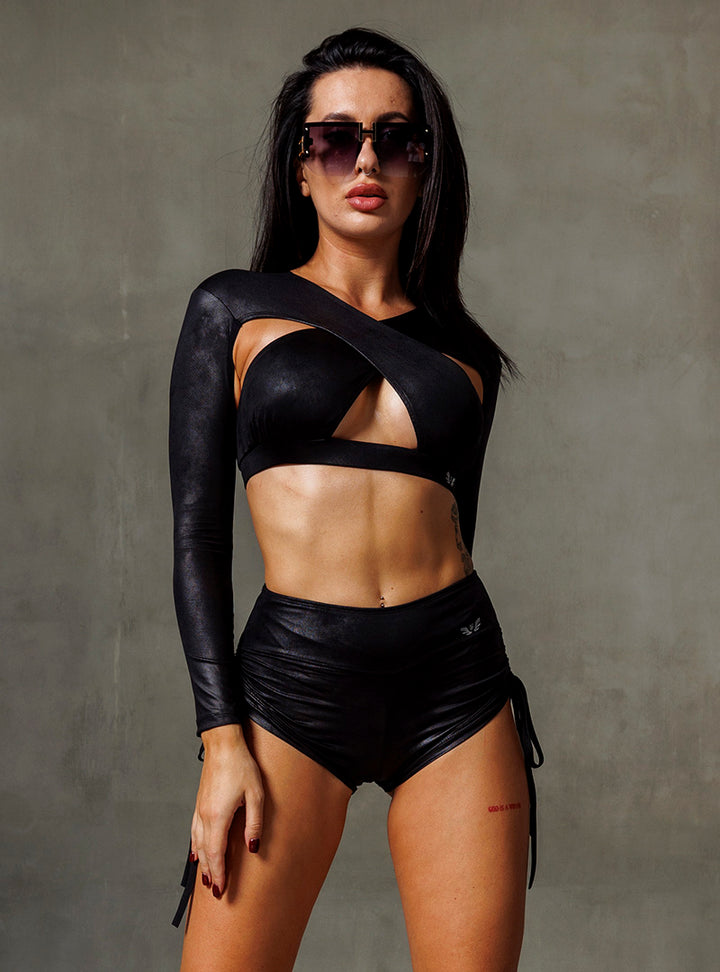
Style should support movement
Wearing something you love can help you feel confident, but comfort and secure fit come first. The balance between silhouette and practicality is what makes a dance outfit useful throughout class.
5 Heels Dance Outfit Ideas for Different Classes
These outfit ideas offer different approaches to styling your dancewear, whether you're attending a first session, filming choreography, or practicing floorwork.
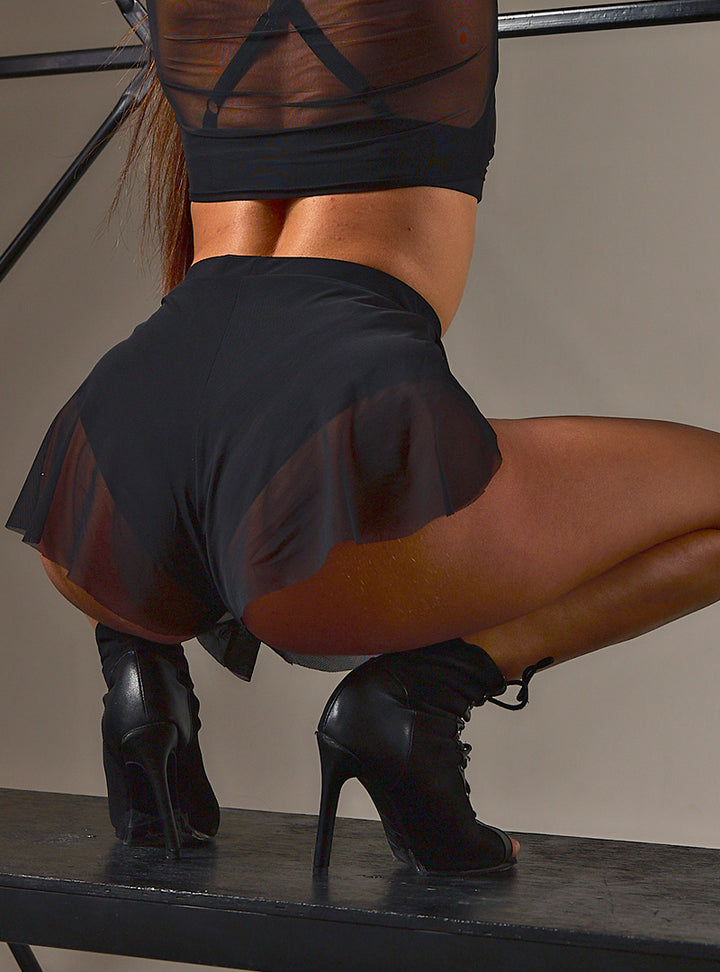
Comfortable shorts and a supportive top
The AIR mesh shorts with built-in shorts combine a light outer layer with added coverage. Pair them with a fitted top that stays secure when you lift your arms or bend.
Explore heels dance tops to complete the outfit.
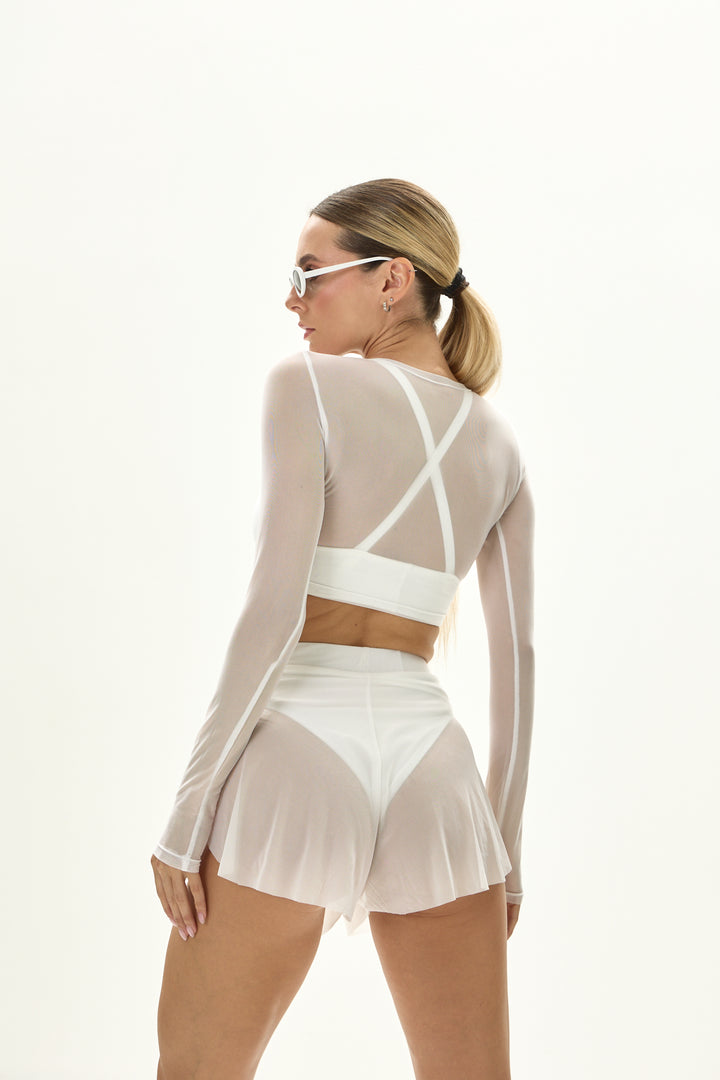
A coordinated look for choreography
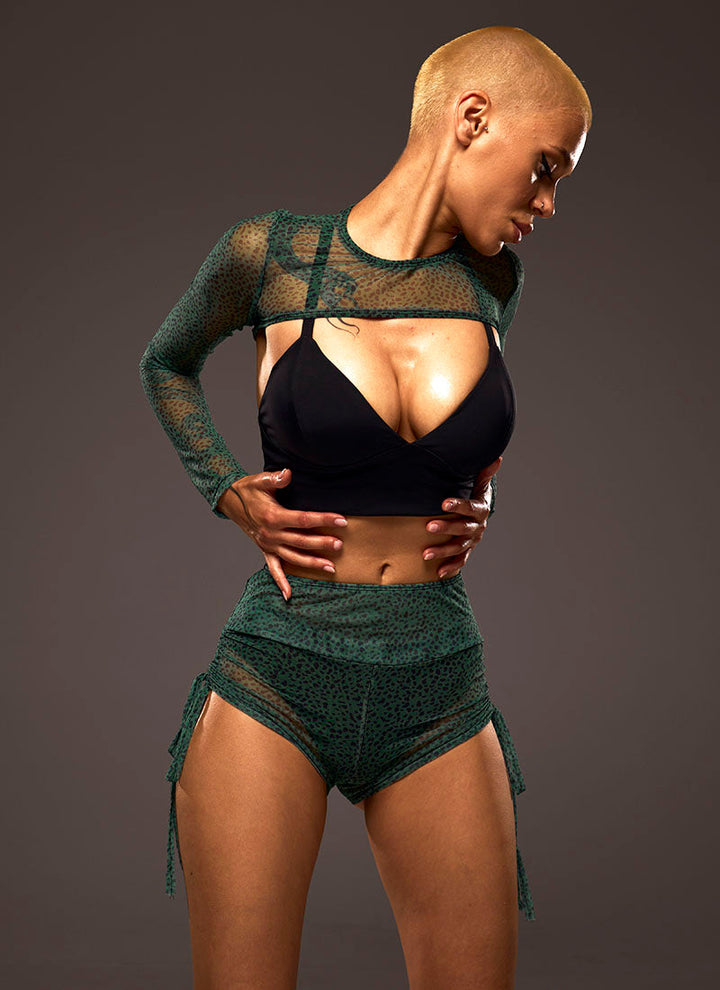
The MALVA AIR set pairs a long-sleeve mesh top with shorts. Check the transparency and included layers to decide whether it's right for your class.
See more heels dance sets for other combinations.
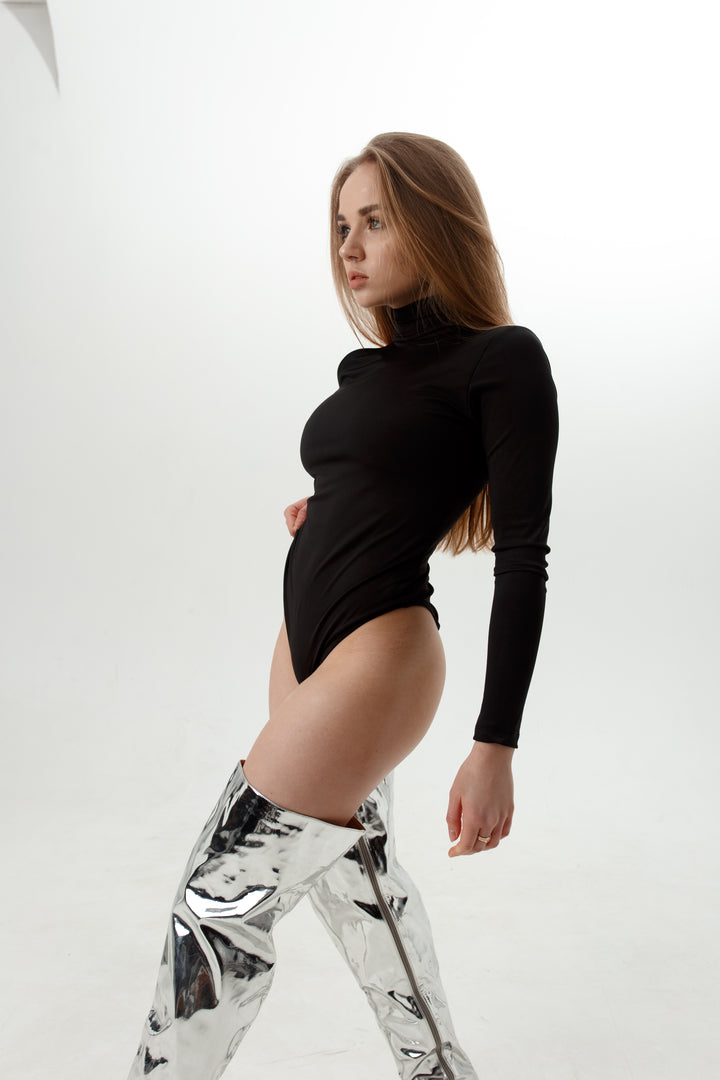
A bodysuit for a clean silhouette
A fitted bodysuit offers a continuous look without combining separate pieces. The HALF black style is one option to consider; check torso length, comfort, and range of motion before wearing it for a full session.
Find more inspiration in the DressFit Heels collection.
A bold faux-leather-look outfit
The CLAR faux-leather-look shorts can be paired with a close-fitting top for a strong silhouette. The CRUZ CLAR set is another coordinated option.
If your lesson includes floorwork, check how the material behaves against the studio floor.

Practical clothes for floor movements
For repeated kneeling and floor transitions, prioritize flexible pieces that stay in position. DressFit black knee pads can complement the outfit when your instructor recommends additional protection.
More covering layers may also feel comfortable, depending on the floor and choreography.
What Shoes Should You Wear to Heels Dance Class?
Your footwear depends on the class format, your experience, and studio policy. There is no universal heel height that every beginner should wear.
Choreography-focused classes may use dance shoes with moderate heels. Exotic pole often uses specialized platforms. Ordinary fashion heels aren't necessarily suitable for either practice.
What to check before buying
- Which style of shoes the studio accepts.
- Any recommended heel height.
- How securely the shoe supports your foot and ankle.
- The required sole type for the floor.
- How comfortable walking and pivoting feel in the shoe.
If you're starting out, asking the instructor first can save you from buying a pair that isn't appropriate for the lessons.
What to Pack for Your First Heels Dance Class
Preparing your bag in advance helps you focus on the class. Exact requirements vary by studio, but this checklist covers useful basics.
- Dancewear: shorts and a top, a bodysuit, or another comfortable outfit.
- Appropriate dance shoes: check the studio's footwear policy.
- Water: bring a bottle for class breaks.
- Knee pads: if the choreography involves repeated floor contact and protection is recommended.
- Change of clothes: useful for traveling home after practice.
- Hair tie: if you'd rather keep your hair out of your face.
Common mistakes to avoid
- Choosing clothes only for appearance.
- Wearing a top that rides up in motion.
- Wearing pants with hems that catch beneath heels.
- Ignoring transparency in mesh garments.
- Buying shoes before checking studio requirements.
- Forgetting the demands of floorwork.
How to Care for Your Heels Dance Clothes
Dancewear undergoes repeated stretching and washing. Proper care can help maintain its elasticity, appearance, and comfort. Always follow the manufacturer's care label because instructions vary by fabric and finish.
- Separate delicate garments from zippers and snagging details.
- Use the wash program and temperature stated on the label.
- Avoid aggressively pulling or stretching mesh panels during cleaning.
- Dry garments according to their care instructions to preserve shape.
- Follow special care guidance before cleaning faux-leather-look materials.
If you practice floorwork regularly, also inspect seams, waistbands, and high-contact areas for signs of wear.
How to Build a Heels Dance Outfit That Feels Like You
The best outfit isn't necessarily the trendiest look online. It should suit your class, allow your body to move freely, and match the style that makes you feel comfortable.
Shorts and a supportive top are an easy starting point. A bodysuit creates a simpler silhouette, while coordinated sets can work well for rehearsals, workshops, and filmed choreography. For floorwork, pay extra attention to seams, fabric friction, and knee protection.
Explore DressFit Heels Dance Clothing to find shorts, tops, matching sets, and accessories for your next session.
Frequently Asked Questions About Heels Dance Outfits
What should I wear to heels dance class?
Shorts with a fitted top, a bodysuit, a matching set, or stretchy pants can work. Choose clothes that stay in place, allow the required movements, and meet the studio's guidelines.
What's the best heels dance outfit for beginners?
Start with pieces that feel comfortable and secure. Dance shorts and a supportive top are often a straightforward first-class combination.
Can I wear leggings to heels dance class?
Yes, provided they stretch comfortably and don't interfere with your shoes. For a class involving a pole, check whether skin contact is needed for grip.
Do I need heels for my first class?
Studio policies differ. Some introductory classes allow you to begin without heels; others require particular dance shoes. Ask before attending.
What's the difference between Heels Dance and exotic pole?
Heels Dance includes choreography performed in heels, while exotic pole involves a pole and frequently specialized platform footwear. Clothing and grip requirements may differ.
Do I need knee pads for heels floorwork?
They may be helpful when choreography involves repeated contact with the floor. Follow the instructor's advice and consider the studio surface.
What can I wear if I prefer more coverage?
Try stretchy leggings, dance pants, long sleeves, or layered outfits, while making sure the clothes allow your full range of motion.
How do I choose the right dancewear size?
Use the product-specific size chart. Consider waist and hips for shorts, bust for tops, and torso length for bodysuits.
Is mesh suitable for heels dancing?
Yes, depending on the garment and the movements. Check whether it includes a lining or is designed for layering.
Anna Fesenko
Anna Fesenko is the founder and designer of DressFit. She has been involved in dance since childhood, exploring contemporary dance, jazz-funk, and ballet, and later discovering High Heels Dance at an amateur level.
Her interest in movement and design shapes DressFit collections, bringing together distinctive silhouettes, personal expression, and freedom of movement.
Learn More About Anna
